Saturday, July 14, 2012

Avery's Haircut

Well we finally decided that it was time to cut Avery's hair.  

Actually Misty was giving Ethan, Ian, and myself a haircut and Avery said that he wanted one too, so she gave him one.

I wanted to put some before and after pictures on the blog so that we would have it documented for memory's sake.
Avery getting ready for his hair cut.
We had some mixed feelings about cutting off Avery's long hair, but it has become a pain to brush and he has also been asking that it be cut off for over a month now.

Back view of Avery's hair.
Misty put it in a ponytail so that we could save and have it for sentimental purposes.

Avery's hair in a ponytail.
Here we are at the point of no return.  No turning back now.

First cut of Avery's hair.
Hopefully now, he will not be mistaken for a little girl.

Even though the picture below looks like Avery is having second thoughts, he is not.   That was just the best picture, out of all I took, of him after his hair was cut.

What have I done!  No, just kidding.
Well, it is finally done and we all survived it.  Avery is very happy with his new hairdo and we are happy that we now have another little boy. 

Back view of Avery's new hairdo.
Thanks for reading our blog and God bless.


Don, Misty, and Kids.


Home is where the slides are out!


Monday, July 9, 2012

Houmas House And Laura Plantation


So far the Houmas House had the grandest grounds for a plantation with its massive oak trees, fountains, ponds, and gardens.  

There are a lot of photos I did not post on our Houmas House visit, so will post a few more here to give you an idea of how grand the grounds were.

Houmas House gift shop and entrance.

One of the beautiful ponds at the Houmas House.

Houmas House gift shop's back from across the pond.

One of the majestic Living Oaks at the Houmas House.

One of the paths to the Houmas House.

Houmas House through the trees.
Right side of the Houmas House.
I hope the above pictures show some of the beauty that the Houmas House grounds had to offer.  We were quite impressed and so far think it has the best looking grounds.


Our tour guide, Susan, did an amazing job at taking us back in time as she portrayed Caroline Hampton Preston, the daughter of General Wade Hampton, a Revolution War hero,  who purchased the plantation in 1810.


Out of all of the plantation tours that we have done so far, she was by far the best tour guide that we have had.


Susan portraying Caroline Hampton Preston.

The Laura Plantation gardens may not be as well groomed, but the main house is bright with color and charm.  


This plantation is unique because it is a Creole plantation which was ran differently from American plantations of the time.  This plantation was also mostly owned and ran by women, which was not allowed by the American plantations of the time.


It seems even though the plantation made the owners very rich, none of them really seemed too happy and lived lives that were empty due to the demands of running the plantation.


It just goes to prove that money is not everything and if you are not happy with your job, no amount of money will make it better.  We hope that our children realize material things don't make you happy, but it's the experience of life itself and relationships that you make along the way.


The Laura Plantation had more of a tropical feel to it than its neighboring French and American plantations.

Entry way to the Laura Plantation.
The big metal pots that you see all over the Louisiana plantation trail were used in the making of sugar by boiling the sugarcane juice down to make molasses and sugar.  Now they are used mostly for planters and fish tanks.

Sugarcane pot used as a planter.
Sugarcane pot used as a fish tank for gold fish.
 It was explained to us by the tour guide that if the house was painted yellow then French was the main language spoken.  If the house was painted white, then the language spoken in it was English.

Laura Plantation main house.
All throughout the house were olive jars which we were told made good refrigerators when buried with just the glazed part of the neck sticking out of the ground.  The inside of the jars were glazed while the outside weren't and when buried the outside would wick in the moister of the ground and keep the inside at around forty seven degrees, which is close to the temperature of today's refrigerators.

\
Olive jar.
The house was built on columns that went eight feet into the ground which rested on a pyramid style of support so that it did not sink into the silt and sand that makes up most of the land in Louisiana, especially near the Mississippi river.


Column in basement of main house.
The view from the front porch of the Laura Plantation was not quite as spectacular since it does not have the columns of oak trees leading up to the house. We were told that prior to the levee being built one would have had a beautiful view of the Mississippi.


Look towards the Mississippi from the front of the main house.
Behind the house was the kitchen and barns to keep the chickens and other livestock in.  At this period in Louisiana time it was illegal to have your kitchen in the house due to the threat of fire.  It also was not put in the house to help keep it cooler in the warmer months of the year. 

If I remember correctly, the kitchen burnt down at the Laura Plantation, which is also the common story at other plantations we visited.  I see the need for the law now.

Back view from the main house to where the kitchen used to be.  What remains are the chicken coops.
The Laura Plantation did have a working garden that also included all different type of peppers.  I can not remember the name of the peppers below, but they start out purple changing colors to yellow, orange, and finally red when ripe.

When Courtney saw them she said, "Oh, they look like pretty Christmas lights"!

Peppers Courtney thought looked like Christmas lights.
There were also bananas growing all over the Laura Plantation.  I wish we could have picked some, but the tour guide was not offering and so I did not ask.

Bananas growing on the plantation.

Ian next to a bunch of bananas.

The Laura Plantation still has some of its 1840 slave cabins which were still being used to house workers on the plantation up to 1977.

The real history with these slave cabins is that the famous west-African folktales of Br'er Rabbit or Compair Lapin were first recorded here.
One of the original slave cabins on the property.

In the next post I will show you our visit to Oak Alley and why it is named such.


I hope you enjoy our posts and that they give you a glimpse of what we are up to and experiencing on our adventure.


Until next time, God bless.


Don, Misty, and Kids.


Home is where the slides are out!


Saturday, July 7, 2012

Kountry Air

Kountry Air RV Park Entrance.
While working in Montgomery, AL we stayed at the Kountry Air RV Park located in Pratville, AL which is owned by Gigi and Don who are some of the friendliest people you could ever want to meet.

Their park is very laid back and easy to relax in while Don and Gigi will do just about anything, within reason, to make your stay there as pleasant as possible.

We enjoyed their company so much, we invited them over twice for dinner and enjoyed good food, along with some of Gigi's homemade ice cream, and conversation.  

Gigi also helped entertain the kids by driving them around the park in her work cart and buying them a water sprinkler to play in and to help with the heat.

Kids enjoying their buggy ride.
We could not have had better hosts and so far they have been the best campground hosts that we have encountered on our adventure.

Courtney, Chloe, Tia, Avery, Gigi, Don, Ethan, & Ian.
After the work was finished in Alabama, we wanted to get back to Poche' Plantation in Convent Louisiana to take in some more plantation tours and visit Baton Rouge and New Orleans, so loaded up the RV and headed back west.

Discovery 40G ready to hit the road.
During our stay at Kountry Air I also ordered an electric Weber Q grill which I'm starting to like better and better the more I use it.  I can use wood chips with it to produce a good smoke flavor and it is much easier to use than a charcoal grill.  I would have went with gas, but to take advantage of the LP gas on the RV I would need one that could be used with both bottled and natural gas and they are harder to find.
Weber Q electric grill.
Even though there are more plantations in Louisiana than you can shake a stick at, the four below are ones we have or will have visited during our stay at Poche' Plantation.

Plantation Parade On The Great River Road.
So far we have been to the Houmas House, Laura, and Oak Alley.  We plan on visiting San Francisco either this Sunday or the following weekend.

There are still many other attractions in Louisiana to visit such as the Saint Joseph Plantation along with sights in Baton Rouge and New Orleans.

In order to save time and get a post out to everyone I'm going to stop here tonight, but promise to post our plantation visits on-line in the near future.

We are also praying that the power is restored everywhere and thank God no family or friends where injured during the storms that went through West Virginia and neighboring states last week. 

I did see on Facebook where one of our friends was bitten by a copperhead while cleaning up after the storm and so will be praying that they have a full recovery.  I think they will be OK though, since they are good country folk and know how to take care of themselves.

It should not be too awful long until I post some plantation visits, so please keep an eye out for them.

Thanks and God bless!

Don & Misty Lively with Kids.


Home is where the slides are out!


Wednesday, June 27, 2012

Poche' Plantation


Misty and kids chilling on the front porch. 

Friday we left Galveston Bay Texas for Convent Louisiana to stay at the Poche' Plantation RV Park.   It is an old tobacco plantation which was build by Judge Felix Pierre Poche' in 1870.


Historical marker for Poche' Plantation.
The current owner, Mark, was kind enough to take us through a tour of the house, which was a real treat.  He encouraged us to touch everything, sit on the furniture, and not be afraid of any ghosts.


Front view of the Poche' Plantation house.

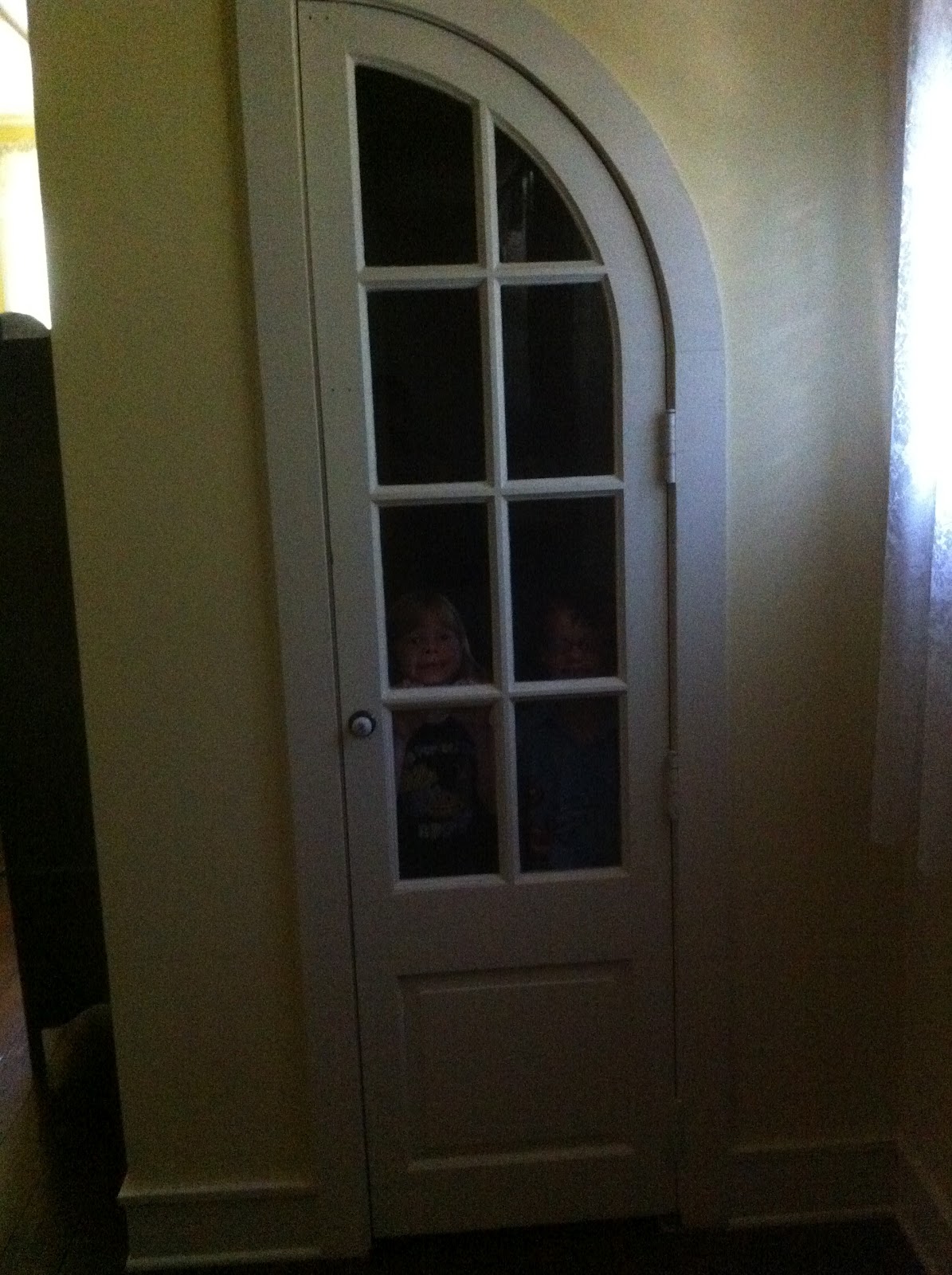
While touring the upstairs I thought I got a picture of some ghosts in the master bedroom closet.  If you look real close into the glass right above the door handle, you can see their images.  At this point I was starting to believe the stories of ghosts in this house were true.


Picture of two ghosts looking out the closet.

But upon further investigation, I determined that these where not  ghosts at all. 

Tia & Ethan trying to scare their dad.

When asked whether or not the kids enjoyed the tour, the majority won with a vote of four out of six or sixty six percent.  Tia enjoyed the tour also, but was just being stubborn.


 Kids sitting on one of the beds in the house.

Behind the house is a beautiful water fountain with a patio.  The long portion attached to the back of the house is the kitchen and now garage.

Patio and water fountain behind the Poche' Plantation house.

Below is a shot of the well on the side of the house.  According to the current owner, this plantation was not one of the biggest or richest since it was a tobacco plantation and not a sugar cane plantation like the ones around it.  

Well on the side of the Poche' Plantation house.


Next to the Poche' Plantation is the Saint Michael's Church, which is a very beautiful and historic church.

Saint Michael's Church.

Down the road from the church was Jefferson College which was a nonsectarian institution and was very instrumental in the education of surrounding youth at the time.

Historical marker for St. Michael's Church.

As you can tell from the below pictures, it is very magnificent and beautiful inside.  Of course my pictures do not do it justice for the ornate details of its woodwork and decorations.

 View from the vestibule of St. Michael's Church.

Its pipe organ is supposedly the oldest one still in use anywhere in Louisiana today.

 Picture viewing the back of the church.

Below is a nineteenth century olive jar that was sent to Jefferson College from France full of olives in the mid 1800s.  It is now used to hold Holy Water in the Baptistery.

Holy Water jar. 

Jefferson College which was just down the road from Saint Michael's church and is now the Manresa House of Retreats used by the Jesuits for a three day retreat based  upon the Spiritual Exercises of Saint Ignatius Loyola which includes the practice of silence.


I think I'm going to start a program for the kids that includes a vow of silence too.  They might not grow spiritually, but I'm sure Misty and I will.

Historical marker for the Manresa House of Retreats.

One reason I post this is that the evening we first arrived at the Poche' Plantation, we were ready to eat dinner.  To get to any food we had to drive six miles one way or thirteen miles the other way in order to find eating establishments.  

While talking to some other campers in the park, they told us they saw a plantation just down the road, which looked very nice, that was full of people eating and so must be popular.

When we drove down past it there were cars parked all down its side which did look like a dinner crowd.  It was getting dark, so we could not really see the historical marker or any other signs giving us any details.

But after some research we soon discovered that we would not be eating there anytime soon.

It is a very beautiful location and according to individuals who have made a retreat there, it has been very beneficial and they plan their year around their pilgrimage there.

Front view of the Manresa House of Retreats.

The next plantation we visited was the Houmas House located up the river from the Poche' Plantation.

Historical marker for the Houmas House.
This plantation was known as "The Sugar Palace" and is very beautiful with its gardens and ponds.  The grounds are breathtaking with six hundred year old Living Oaks, colorful flowers and plants.


Below is the view from the front gate toward the house through the majestic Living Oak trees planted in rows in order to direct the cool breeze off of the Mississippi River into the house to help keep it cool during the hot months of the year.


Front view of the Houmas House.

Below is a shot from the second floor balcony towards the mighty Mississippi river in front of the house. 


View from second floor balcony.

The map below dated 1847 was one of four and listed all of the plantations in the state of Louisiana at the time to include a census of population.  The map was found hidden in the floor joists of the house in the 1970s while they were doing some renovations.

The reason it was hidden was due to the Civil War and this map would have been invaluable to the Union Army if found.  With it, they would have know the population and exactly where all the plantations were located.

It is sort of amazing how, back then, such a piece of information was so powerful when today we can get information on about anything by Googling it.

Louisiana Plantation Map with Census.

I know it has been about two weeks since I last posted, but with me having to work on-site in Alabama this week, I just have not had the time to devote to our blog.  I'm hoping work slows down here in the near future, but get the feeling it is only going to speed up.


If we have time we want to go back to the Poche' Plantation and spend some time with some of the families we met who are staying there the entire summer.  The kids played well together while Misty and I had some good conversations. 


Don


Home is where the slides are out!